They will be on video but won't see you.
 Make sure to enable your mic if prompted.
 Language:


Diamonds Buying Guide
Jump To Section...
-

Brilliant round diamonds rings
The most popular shape, offering great flexibility. -
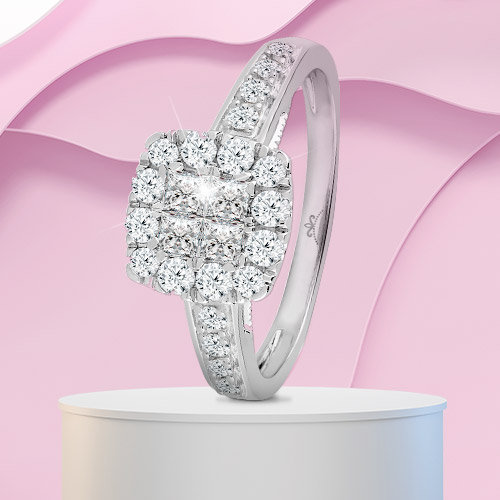
Princess diamond rings
The colour of the diamond is shown in each of the corners as well as the centre. -
-
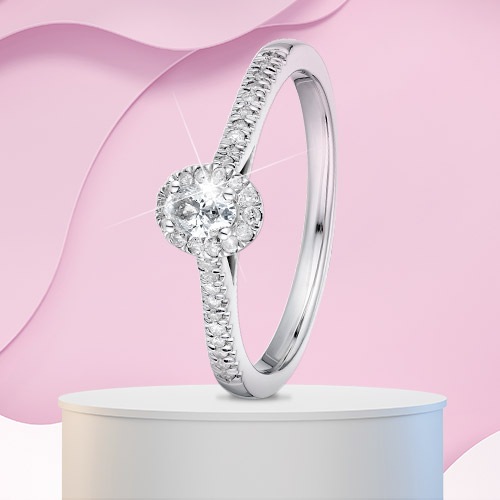
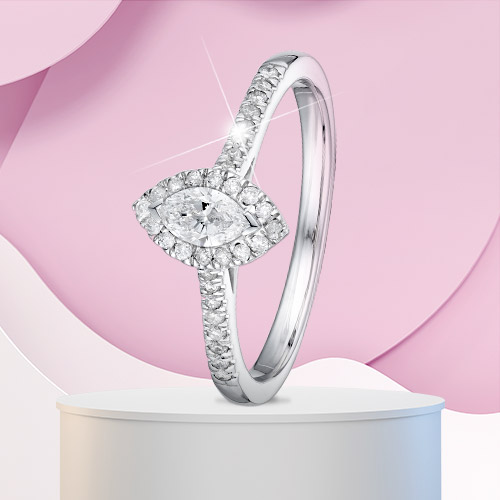
-
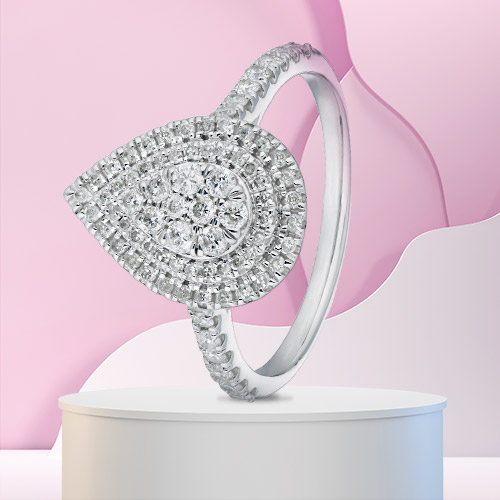
Pear diamond rings
A combination of round and marquise cuts to give a teardrop-shaped diamond. -
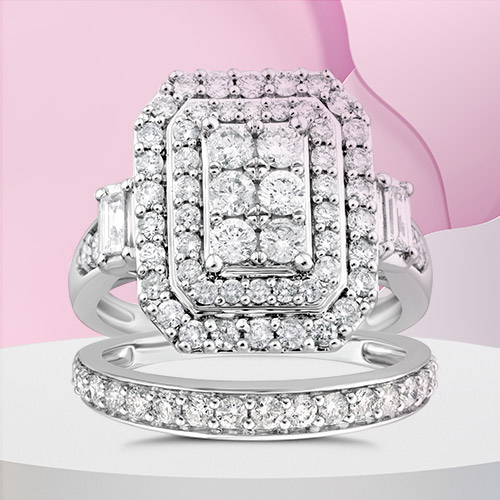
Baguette diamond rings
marquise cuts to give a teardrop-shaped diamond. A long, rectangular shape that is similar in style to the emerald cut. -
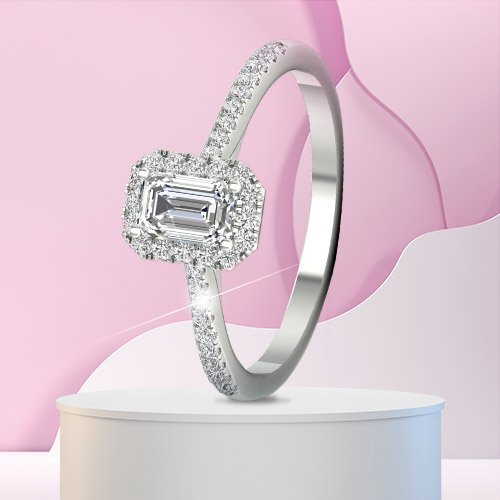
Emerald diamond rings
Great for showcasing the diamond’s clarity & making its colour more apparent. -

Radiant diamond rings
A vibrant and lively square diamond, perfect for a refined look.
The 4 Cs
What are the 4 Cs?
Diamonds are often the most significant gemstone you'll ever purchase, usually forming an engagement ring, wedding ring, anniversary gift, or other symbolic pieces of jewellery. The process of buying a diamond can often be a daunting one, as such a wealth of information on this most precious of gemstones can lead to a lot of confusion.
However, it is unlikely that you will ever research a diamond and not come across the term 'The 4 Cs' which refers to what has been agreed as the four key factors that determine the value and quality of a diamond. Below, we have outlined the 4 C's (cut, colour, clarity and carat) in what we hope is the simplest, yet fully informative way possible, to help you with your diamond buying journey.
Shop Diamond JewelleryThe cut
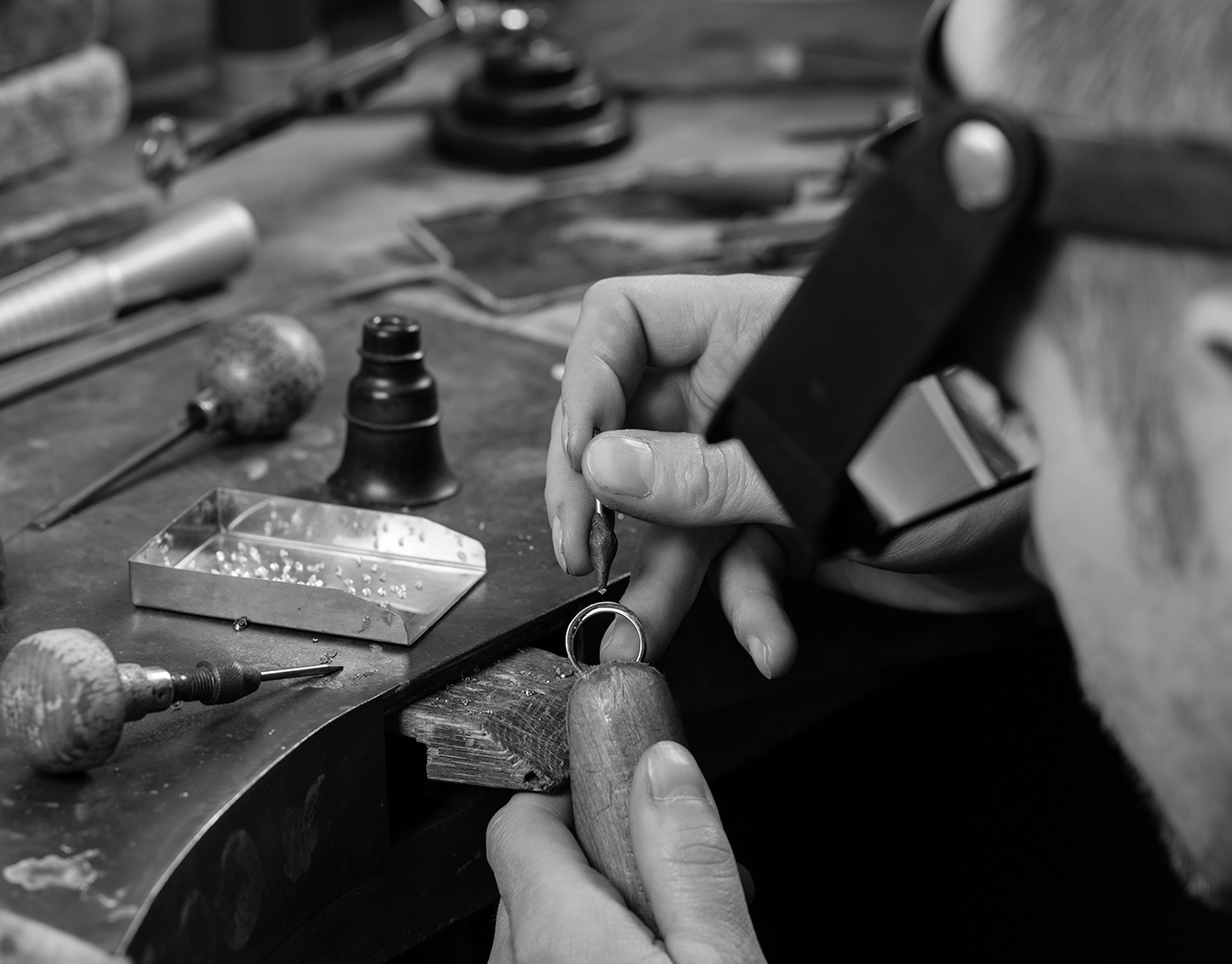
A diamonds cut refers to its proportions and finish, influencing the value of a diamond. A skilled professional will work on a diamond stone to give it its cut, transforming it from its natural form, and cutting it into a finished shape that is more familiar. The cut should not be confused with shape as discussed above, which refers to the shape of the finished diamond, such as princess or baguette.
The cut of the diamond can affect the way the light catches the stone, effecting the way it sparkles. The way a diamond is cut affects three important diamond-attributes:
- Brilliance – the total light reflected from a diamond
- Fire – the dispersion of light into the colours of the spectrum
- Scintillation – the flashes of light, or sparkle, when a diamond is moved.
A perfectly cut diamond will allow rays of light from all sides to bend towards the centre of the stone, and be reflected back through the top of the stone in a burst of rainbow coloured light. Diamonds with a poorer cut will allow light to 'leak' or 'escape' through the base or sides of the stone.
The quality and grade given to the cut of the diamond can be measured by the following attributes:
Proportion – This refers to the relationship between the table size, crown angel and pavilion depth. This affects how the stone interacts with light (making it sparkle), and there are many proportion combinations available. Symmetry – This refers to the precision of the shape and the placement of the facets, and again affects the stone's relationship with light Polish – This refers to the overall condition of a gem's facet surface, and is the finishing touch put on a newly cut and crafted diamond
The colour
The colour of a diamond is considered one of the key factors in determining the value of the stone. A traditional diamond is considered to be a 'white' stone, although they can actually be found in many colours, such as pink and yellow.
The most desired and precious traditional 'white' diamond should be as colourless as possible. The GIA (Gemological Institute of America) defined and developed a very precise scale of colour grading, and use this to grade diamonds by comparing them to a master stone.
The GIA colour grading scale is the industry standard. The scale runs alphabetically from D to Z+, with D being the highest, best grade possible given to diamonds that are the rarest and most desirable. This is the grade that is classed as colourless. The full scale runs as below:
D-F colourless
G-J near colourless
K-M faint yellow
N-R very light yellow
S-Z light yellow
Z+ fancy yellow – a diamond with a distinct colour such as green, pink, blue, purple, yellow, brown, black or red
Z+ Z+ indicates that this type of diamond is what we call a coloured diamond, and so should have a vivid hue of the colour in question
Completely colourless diamonds are exceptionally rare. High quality commercial diamonds are most likely to fall within the G-J grading of 'near colourless'.
The clarity
All diamonds are beautiful, but they all have minute imperfections. This is what makes every individual diamond stone as unique as a fingerprint. However, like colour, the level of imperfections in each diamond can differ hugely, and so clarity refers to the level of flawlessness the diamond has. Imperfections are classed as inclusions (internal flaws), which can make the diamond look cloudy, and blemishes (external marks) such as scratches.
The fewer imperfections a diamond has, the more flawless it is, meaning the diamond is considered to be rarer and more valuable.
The GIA clarity grading scale runs as below:
FL flawless
IF internally flawless
VVS1-2 very, very small inclusions
VS1-2 very small inclusions
SI1-2 small inclusions
I 1-3 inclusions may be visible to the naked eye
The IGI scale combines grades FL & IF, grouping them together as the very best clarity available.
The carat
The term 'carat' refers to the weight of a diamond, and not the size. One carat of diamond weighs 200 milligrams or 1/5th of a gram. One carat of diamond can be divided as 100 points of diamond. As such, this can then be divided down, so that 50 points of diamond refers to half a carat of diamond and 25 points refers to a quarter of a carat of diamond, and so on.
Many people consider the carat to be the main factor that determines the value of a diamond, as in many instances the bigger the diamond, the more you'd expect to pay. However, this is not the sole factor in determining a diamond's value, and should not be the only factor taken into account, as the other C's can have a big impact.
Two diamonds of the same carat may differ dramatically in value, if their colour and clarity are extremely different. So it is important to remember to check the other factors alongside the carat, and not just assume that the higher the carat weight, the higher the value of the diamond, as this is not always the case.